


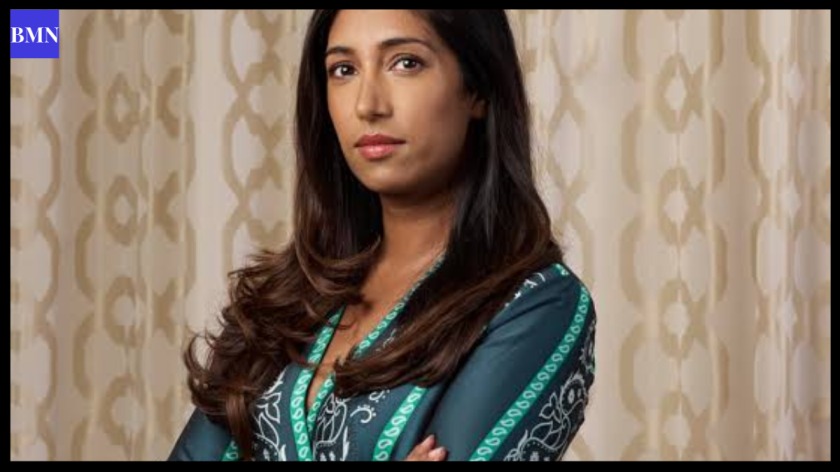
Tina Daheley is a popular journalist, newsreader and broadcaster in Britain who has established herself through her career in BBC radio and television. She is known for her contributions in BBC Radio 1, BBC Radio 2, BBC Breakfast and BBC News programs. She has also worked in Crimewatch and Points of View. Her popularity has soared recently due to her absence from the BBC Radio 2 Breakfast Show after serving the show for over seven years. People are curious to know about her boyfriend, her parents, her daughter and her children, her religion, salary and professional relations with Scott Mills.
Wikipedia Biography, Age, Education and Early Career
The broadcaster is an English journalist, newsreader and presenter who has worked for the BBC since 2007. She was born in London and grew up in Perivale, West London. Her educational background is particularly unusual for someone who eventually became a prominent journalist. She studied computer science at Brunel University, where she achieved a first-class degree. She later changed professional direction and completed a Master’s degree in broadcast journalism at the University of Leeds. This combination of technical and communication skills helped provide a strong foundation for her later career. It also demonstrates that journalists do not always have to follow a traditional route into the media industry.
Her early BBC career involved a mixture of production, reporting and presenting work. She gained experience on BBC Three and worked in news and sports broadcasting before becoming more widely recognised. Her early television credits included 60 Seconds and Free Speech, while she also developed experience covering women’s football. These opportunities allowed her to learn the practical demands of live broadcasting, including researching stories, preparing scripts, interviewing contributors and responding quickly when information changed. Rather than becoming famous overnight, she gradually built a reputation through a series of different broadcasting positions. That experience became particularly valuable when she later moved into high-profile national radio and television programmes.
Her radio career became another major part of her professional identity. She worked as a sports newsreader on The Chris Moyles Show before joining the Radio 1 Breakfast Show with Nick Grimshaw. She subsequently moved to BBC Radio 2 in 2019, becoming the newsreader on the Breakfast Show. Alongside radio, she continued appearing on television, including BBC Breakfast and national BBC News programmes. She also became associated with Crimewatch and Points of View. This broad experience is important because it shows that her career has never depended entirely on one programme. She has developed the ability to work across breaking news, entertainment, current affairs, sport and factual television.
Parents, Family Background and Professional Development
The search for the broadcaster’s parents is connected to an important part of her personal story. Her father came to Britain from Tanzania, while her mother is from Nairobi, Kenya. Her parents arrived in Britain during the 1970s and raised their family in West London. She has previously spoken about growing up without seeing many people from backgrounds similar to hers in prominent television roles. That experience influenced how she viewed the broadcasting industry when she was younger. At the time, a career in national television did not necessarily seem like an obvious path for someone with her background. Her family’s encouragement and her own determination nevertheless helped her pursue education and eventually move towards journalism.
Her background has also made her an interesting figure in discussions about representation within British broadcasting. Over the years, audiences have become increasingly familiar with presenters from a wider range of cultural and social backgrounds. Her career is part of that broader change. However, her achievements should not be reduced simply to representation. She has spent many years developing the practical skills required for successful broadcasting, including accurate news reading, live interviewing, research, editorial judgement and communication under pressure. Her technical education may also have helped her approach complicated subjects in a structured way. The combination of personal experience, education and professional training has allowed her to develop a distinctive position within BBC broadcasting.
The journey from computer science student to national broadcaster also offers a useful lesson for aspiring journalists. A first degree does not necessarily determine an entire career. Her move from technology into journalism shows that people can transfer skills between apparently different industries. Analytical thinking, research, attention to detail and the ability to understand complex information are all useful in news broadcasting. Her later Master’s degree provided the specialist journalism training she needed, while her practical BBC experience allowed her to learn how broadcasting works in real situations. Her career therefore demonstrates the value of remaining open to changing direction when a different professional opportunity becomes more appealing.
Partner, Daughter and Children
One of the most frequently searched subjects is the broadcaster’s partner. Her long-term partner is Kane William-Smith, who has worked within the entertainment and comedy industry. Publicly reported information states that the couple met while on holiday in Ibiza in 2012 and later became engaged in January 2018. William-Smith has generally maintained a much lower public profile than his partner, despite his work in entertainment. He is associated with JokePit, a comedy ticketing and marketing business. Because the couple tends to keep their personal life private, there is considerably more public information about their professional activities than about their everyday relationship.
The couple have one daughter, who was born in April 2021. This answers another common search about the presenter’s children. She has generally protected her daughter’s privacy and has not made the child a major part of her public profile. That decision is understandable for a broadcaster who spends much of her professional life in the public eye. Although audiences may be interested in the family behind a well-known presenter, there is an important difference between publicly confirmed information and online speculation. The confirmed information is that she has one daughter. Details about the child’s private activities, education or everyday life should not be assumed unless they have been publicly confirmed.
Motherhood has nevertheless influenced the broadcaster’s approach to work. Breakfast radio is particularly demanding because presenters and newsreaders need to begin their working day extremely early. For someone with a young family, this schedule can make ordinary routines difficult. After many years of working on breakfast programmes, the opportunity to have a more conventional morning became increasingly attractive. Her decision to leave the Radio 2 Breakfast Show in 2026 therefore had a practical dimension as well as a professional one. Moving away from a daily early-morning commitment can provide greater flexibility and make it easier to balance broadcasting responsibilities with family life.
Why Is She Not on Radio 2 Breakfast?
The question of why she is no longer on Radio 2 needs a small but important clarification. She left the Radio 2 Breakfast Show, rather than completely ending her relationship with BBC Radio 2. She joined the programme in 2019 as its newsreader and initially worked alongside Zoe Ball. Later, she remained part of the programme when Scott Mills became the presenter. During her years on the show, she became a familiar voice for listeners and contributed to the wider conversations taking place during the programme. Her role required accuracy, speed and the ability to respond naturally to breaking stories while working within a fast-moving live broadcast.
In 2026, she announced that she would step away from the breakfast programme after more than seven years. By that point, she had spent approximately 18 years working across breakfast radio, including BBC 1Xtra, Radio 1 and Radio 2. The demanding schedule was an important factor in her decision. Breakfast broadcasting requires early starts that can make normal family routines difficult. After so many years of working through the early hours, she indicated that she was looking forward to having a more conventional morning. The decision therefore appears to have been a personal career choice rather than a dismissal or an indication that she had lost interest in broadcasting.
It is also important to understand that leaving the breakfast programme does not mean leaving the BBC. She has continued to be associated with other BBC broadcasting opportunities, including Radio 2 cover work and television appearances. This gives her the chance to remain active while avoiding the fixed demands of a daily breakfast schedule. For listeners wondering where she has gone, the simplest explanation is that she has moved into a different phase of her career. Her departure from one programme should not be confused with retirement. With extensive experience in radio, television and national news, she remains well placed to take on a variety of future broadcasting roles.
Scott Mills, Radio 2 Changes and What Happened
The search phrase involving the broadcaster and Scott Mills became particularly relevant after Mills took over the Radio 2 Breakfast Show in 2025. Daheley remained as the programme’s newsreader, creating a familiar presenting partnership for listeners. Their roles were different but complementary. Mills was responsible for leading the programme, while Daheley delivered news and contributed to conversations around major stories. Her experience made her well suited to the role because she had already spent many years working in breakfast radio. The pair therefore became part of a familiar morning routine for Radio 2 listeners.
Key Radio 2 changes included:
- Scott Mills taking over the Radio 2 Breakfast Show in 2025.
- Daheley continues as the program’s newsreader.
- Changes to the breakfast presenting line-up during 2026.
- Mills subsequently left the breakfast programme.
- Daheley later stepped away from the breakfast show.
- A new direction for the Radio 2 morning schedule.
The breakfast programme subsequently experienced significant changes during 2026. Mills left the show following a BBC controversy, while the wider Radio 2 presenting line-up also changed. The developments attracted substantial media attention, particularly because breakfast radio is one of the BBC’s most prominent daily broadcasting slots. However, Daheley’s own decision to leave should not automatically be attributed to Mills’ departure. She had already spent around 18 years working in breakfast broadcasting and had her own reasons for wanting a different schedule. Her departure was therefore a separate career decision, even though it occurred during a period of considerable change at the station.
Their professional relationship remains an interesting part of her recent broadcasting history because listeners had become accustomed to hearing both voices during the morning programme. However, focusing too heavily on their working relationship can obscure the broader story of her career. She had already established herself through Radio 1, BBC News and television before working alongside Mills. Her professional identity therefore extends far beyond the Radio 2 Breakfast Show. The end of that particular partnership represents a change in programme structure rather than the end of her wider broadcasting career.
Latest News, Career Changes and Future Broadcasting Work
Recent news surrounding the broadcaster has centred on her decision to leave Radio 2 Breakfast after more than seven years. Her departure marked the end of a long period of early-morning broadcasting that had stretched across several BBC stations. Such longevity is significant because breakfast radio requires a very demanding routine. Presenters need to be alert and prepared during hours when most people are asleep, while also responding immediately to breaking news and unexpected developments. Maintaining that level of performance for nearly two decades requires considerable discipline. Her decision to move away from the format therefore represents a substantial lifestyle change.
Her future career remains connected to the BBC. She has considerable television experience, including appearances on BBC Breakfast and national BBC News programmes. She has also worked on Crimewatch and Points of View, giving her experience beyond traditional newsreading. This means that leaving Radio 2 Breakfast could actually provide opportunities for greater variety. Without a daily breakfast commitment, she may have more flexibility to work on television, special broadcasts, factual programming, radio cover and other projects. Her established reputation and experience mean that she does not need to rely on one permanent programme to remain relevant within the broadcasting industry.
The move can therefore be viewed as a natural career transition rather than a setback. After years of early mornings, a more flexible working pattern could allow her to balance professional ambitions with family responsibilities. It may also give her an opportunity to concentrate on areas of broadcasting that she has not been able to explore as fully while working on a daily breakfast show. Her combination of radio experience, television presentation, news knowledge and live broadcasting skills gives her a strong platform for the future. For audiences, the most useful expectation is that she may appear less regularly in one familiar slot while becoming more visible across different BBC programs.
Career Achievements, Benefits of Her Experience and Why She Remains Relevant
The broadcaster’s career demonstrates the benefits of versatility. She has worked across radio, television, sport, current affairs and national news, allowing her to understand how different types of audiences consume information. Her major professional areas include Radio 1Xtra, Radio 1 Breakfast, Radio 2 Breakfast, BBC Breakfast, BBC News, Crimewatch and Points of View. This range is valuable because modern broadcasting increasingly requires presenters to work across several platforms rather than staying within one narrow area. Her ability to adapt has allowed her to remain relevant even as BBC programmes and audiences have changed.
For people interested in journalism as a career, her professional journey provides several practical lessons. First, academic background does not have to limit future opportunities. Her computer science degree initially pointed towards a technical career, but she later moved into journalism. Second, practical experience matters. Working on smaller programmes and specialist broadcasts helped her build confidence before taking on national roles. Third, flexibility is important. Broadcasting schedules and programme formats change frequently, so presenters who can adapt to different responsibilities have an advantage. Finally, long-term success requires more than appearing on television. Accuracy, preparation, editorial judgement and the ability to remain calm during live broadcasts are essential professional skills.
Her decision to leave breakfast radio also illustrates another important lesson: career success does not always mean staying in the same role indefinitely. A presenter can have a successful program and still decide that the working pattern no longer suits their personal circumstances. After around 18 years of breakfast broadcasting, choosing a different schedule is understandable. Her extensive experience means that she can continue contributing to radio and television without maintaining the same demanding routine. For audiences and aspiring broadcasters alike, her career demonstrates the value of building transferable skills. Those skills can provide opportunities even when a long-running programme comes to an end.
Frequently Asked Questions
What happened with Tina Daheley?
She left the Radio 2 Breakfast Show in 2026 after more than seven years. She continues to work with the BBC in other broadcasting roles.
What religion is Tina Daheley?
She comes from a Sikh Punjabi family background. Her current personal religious beliefs have not been widely confirmed publicly.
Does Tina Daheley have children?
Yes, she has one daughter, born in April 2021. She keeps her child’s private life largely away from the media.
How much does Tina Daheley earn?
Her latest reported BBC salary is in the £300,000–£304,999 range for 2025/26. BBC salaries are published in bands rather than exact figures.
Who is Tina Daheley’s partner?
Her long-term partner is Kane William-Smith. They have one daughter together and generally keep their family life private.
Conclusion
The story of Tina Daheley is an illustration that determination, adaptability, and great skills in broadcasting may lead to career success in the UK’s media industry. Tina started with computer studies and became a reputable BBC journalist working in various areas, including radio broadcasting, television, news, sports and current affairs. The leaving of her job at Radio 2 Breakfast Show in 2026 is not an end but a new stage in her career. The family background, relations with Kane William-Smith, and her being a mother are also popular among the audience, while she tries to keep her family life private.