


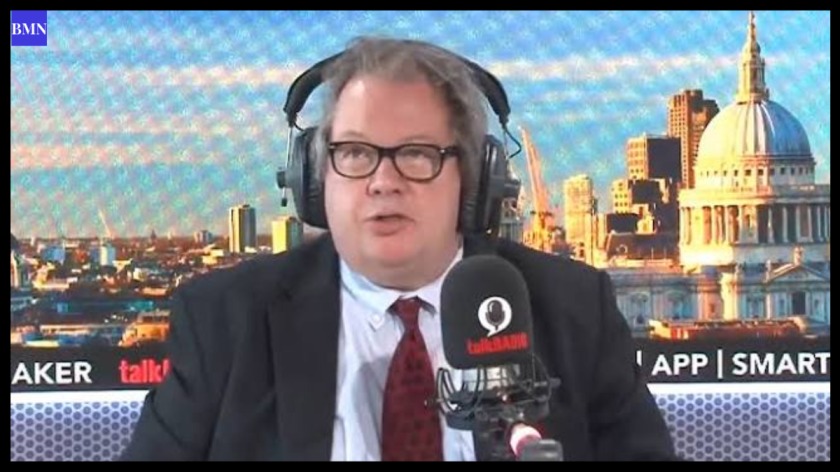
Mike Graham has spent decades working in British journalism and broadcasting, building a career that has taken him from newspapers to radio, television and online media. Many people know him for his outspoken interviews, political discussions and regular interaction with listeners. Over the years, he has worked with well-known broadcasting platforms including Talk SPORT, talk RADIO, Talk TV and Talk. More recently, interest in his career has grown because of his move into independent digital broadcasting. People are now searching for where he is, what he is doing and whether he is still active on YouTube. This article looks at his early life, journalism career, radio work, broadcasting style, personal life, controversies and current online activities in a clear and easy-to-follow way.
Who Is the British Broadcaster? Biography and Early Life
Archibald Michael Graham was born on 9 August 1960 in Hampstead, London. His parents were Scottish, and his father, Archibald Graham, worked as a newspaper graphic artist. He attended schools in London before studying at the University of Bath, although he left without completing the course. His early connection with newspapers helped direct him towards journalism, where he developed practical skills in reporting, editing and news gathering. Unlike broadcasters who began their careers on television or radio, his professional foundation was the newspaper industry, particularly the competitive environment of Fleet Street.
His journalism career eventually included work with major newspapers such as the Daily Mirror, Sunday Times and Daily Express. He also held senior editorial positions, including editor of the Scottish Daily Mirror and assistant editor of the Daily Express. His career was not limited to Britain. He spent several years in New York and worked in international journalism, while in 1992 he reported from Bosnia during the war there. These experiences exposed him to different forms of reporting and helped develop the ability to work with rapidly changing information and difficult interviews.
The newspaper experience provides important context for understanding his later broadcasting career. A journalist working in a busy newsroom has to identify important stories, check information, meet deadlines and make editorial decisions quickly. Those skills transferred naturally into live radio, where a presenter has to react to unexpected answers and breaking developments. His career therefore represents a progression from traditional journalism into talk radio and then television and digital media. Readers searching for Mike Graham Wikipedia should also remember that the name is shared by an American professional wrestler, meaning that search results should always be checked for the correct person.
Journalism, Fleet Street and Radio Career
The transition from newspapers to radio represented a major change in how Graham communicated with audiences. Newspaper journalism had trained him to research stories, deal with sources and understand editorial priorities, while radio required a much faster and more conversational approach. He joined Talk 107 in Edinburgh in 2006 and presented a mid-morning programme before becoming the station’s programme director. His broadcasting career developed quickly, and the experience helped establish the style that would later become familiar to national audiences.
After Talk 107, he moved into national radio and became associated with Talk SPORT. One of his better-known roles was presenting The Two Mikes with Mike Parry. The program combined conversation, humor, argument and sports-related discussion, helping Graham build experience in a less formal broadcasting environment. He later became closely associated with political talk radio through talk RADIO and The Independent Republic of Mike Graham. This period was especially important because the program’s identity became strongly connected with its presenter rather than simply with the station carrying it.
His radio career also demonstrated why personality matters in talk broadcasting. Listeners often return not only for information but because they recognize and trust a particular presenter’s style. Interviews, phone-ins, newspaper discussions and political debates gave Graham regular opportunities to interact directly with an audience. His approach was generally more conversational and opinion-led than the traditional style of a newsreader. Over time, this helped create a personal media identity that could move between radio, television and online platforms.
Talk, TalkTV and His Broadcasting Style
The Mike Graham Talk search relates to one of the most visible stages of his broadcasting career. His programs became associated with Talk and Talk TV, giving audiences the opportunity to hear and watch his interviews across different platforms. His radio program was also simulcast on television, illustrating the changing relationship between traditional broadcasting and online video. An interview could be broadcast live, clipped for social media and then watched by thousands of people who had not heard the original program. This helped individual moments from talk radio gain a much wider audience.
His presentation style has generally focused on direct questioning, political discussion and audience interaction. He frequently discusses newspaper headlines and current affairs, while interviews can involve strong disagreement between the presenter and guest. Supporters of this style may appreciate its energy and willingness to challenge public figures, while critics may prefer a more restrained approach. The important point is that his broadcasting identity has always been strongly personality-led. He does not simply deliver a list of news stories; he interprets events, asks questions and invites listeners to respond.
His time at Talk ultimately ended in 2025. He was suspended in October following controversy surrounding a Facebook post that appeared on his account. Graham said that his account had been hacked and that he did not author the post. News UK subsequently announced that he would not return following its investigation. The episode represented a major change in his professional career, but it did not end his work as a broadcaster. Instead, he moved towards independent digital media, where he could continue producing political commentary and interviews for an audience outside a conventional broadcasting organization.
Where Is He Today? YouTube and Independent Broadcasting
One of the most popular current searches is where is Mike Graham today. Following his departure from Talk in November 2025, he moved into independent digital broadcasting. He initially announced an online programme through Substack and launched a new show in December 2025. The programme used the Independent Republic of Mike Graham name before developing into The Mike Graham Show. This move represented an important change because his broadcasting career was no longer dependent on a traditional radio or television employer providing the main platform.
The Mike Graham YouTube search is particularly relevant to his current work. YouTube provides a direct way to publish political discussions, interviews and commentary to an existing audience. Unlike traditional radio, online video can be watched live or later, and individual sections can be shared independently. This allows a presenter to develop a direct relationship with viewers rather than relying entirely on a station’s schedule. For someone with decades of broadcasting experience, digital platforms also provide opportunities to continue a familiar format while experimenting with longer interviews and online discussions.
What his current digital career includes:
- Independent broadcasting following his departure from Talk.
- The Mike Graham Show and political discussion programmes.
- YouTube videos, interviews and online broadcasts.
- Commentary on British politics and current affairs.
- Direct interaction with an established online audience.
- Longer-form discussions that can be watched on demand.
Independent broadcasting comes with both opportunities and challenges. A traditional broadcaster can provide studios, technical staff, marketing and distribution, while an independent presenter has to manage or fund many of these functions. Online audiences also have an enormous number of alternatives, from political podcasts to livestreams and independent news channels. His long career gives him a recognised name and an existing audience, but continued success depends on regular programming, engaging guests, technical quality and credibility. His move into online broadcasting is therefore more than a simple career change; it reflects a broader shift towards presenters building direct digital audiences.
Wife, Personal Life and Family Information
The search for Mike Graham wife is common, but reliable information about his private life is much less extensive than information about his professional career. He has generally kept personal relationships away from the center of his public broadcasting work. His reputation has been built around journalism, radio and political commentary rather than celebrity coverage of his home life. As a result, online articles containing detailed claims about his relationships should be approached carefully, particularly when they do not identify reliable sources.
This is important because celebrity biography websites sometimes repeat the same information without demonstrating where it originated. Repetition does not automatically make a claim accurate. A responsible biography should distinguish between confirmed information and details that cannot be independently verified. For readers searching about his wife or family, the safest approach is to rely on well-established sources and avoid presenting uncertain personal information as fact. His professional career is much better documented than his current relationship status.
There is also a broader reason to handle these searches carefully. Being a well-known broadcaster does not mean every aspect of his private life is public information. His newspaper career, international reporting, radio programs and television work are relevant to understanding his public contribution. Unverified claims about relationships do not add meaningful insight and can reduce the reliability of an article. A strong SEO article should answer genuine reader questions while maintaining a clear distinction between public facts and speculation.
Concrete Controversy, Other Disputes and the Wrestler Confusion
The Mike Graham concrete search originates from a memorable Talk Radio interview in October 2021. Graham interviewed Cameron Ford, a carpenter and spokesperson associated with Insulate Britain, during a discussion about environmental issues and building materials. The conversation turned towards timber and concrete, producing an exchange about whether concrete could be “grown”. The unusual remark became widely shared online and was turned into a viral talking point. The incident is a useful example of how a short section of live radio can become much more famous than the original broadcast after being clipped and circulated across social media.
His career has also included more serious controversies involving factual claims. Talk TV apologized in 2022 after a false claim made by Graham concerning the charity Mind and legal fees connected with asylum seekers. In 2023, Talk TV apologized and paid substantial damages to Migrants Organize following defamatory claims made on his program. These incidents demonstrate why audiences should distinguish between political opinion and factual claims. Strong debate can be part of talk radio, but statements concerning organizations, individuals or legal matters still require accuracy. Readers assessing a broadcaster’s career should therefore consider both his popularity and the controversies that have accompanied his work.
The phrase Mike Graham (wrestler) refers to an entirely different individual. The American professional wrestler was Edward Michael Gossett, who competed under the ring name Mike Graham and was associated with Championship Wrestling from Florida. He was the son of wrestling promoter Eddie Graham. The wrestler should not be confused with the British journalist, whose career was based in newspapers and broadcasting. This distinction is especially important for people searching biographies online because the same name can produce unrelated results. Checking the profession, country and dates is the easiest way to determine which Mike Graham a particular source is discussing.
Frequently Asked Questions
What is Mike Graham doing now?
He now works in independent digital broadcasting after leaving Talk in 2025.
His current work includes The Mike Graham Show on YouTube and other online platforms.
Why did the Two Mikes fall out?
The partnership between Mike Graham and Mike Parry ended in 2019 after their long-running show finished.
Although their disagreement became public, there is no single confirmed explanation for the split.
Why did he say you can grow concrete?
The comment came during a 2021 TalkRadio discussion about timber, concrete and environmental issues.
The unusual exchange with Cameron Ford later became a widely shared online clip.
What is Mike Graham known for?
He is known for British journalism, political interviews, talk radio and programmes including The Two Mikes.
His career has included TalkSPORT, talkRADIO, TalkTV and independent digital broadcasting.
Is Mike Graham still on YouTube?
Yes, he continues to produce online programmes through The Mike Graham Show.
His YouTube content includes political commentary, interviews and current-affairs discussions.
Conclusion
Mike Graham has had a long and interesting career in British journalism and broadcasting. He started in newspapers before moving into radio, television and, more recently, independent online media. His work with TalkSPORT, talkRADIO, TalkTV and Talk made him a familiar voice for many listeners and viewers. His outspoken interviews and political discussions have attracted both support and criticism over the years. Today, his move towards YouTube and independent broadcasting shows how experienced presenters can adapt to changing media habits. While there have been controversies along the way, his ability to remain connected with an audience is clear. Overall, his career is a good example of how traditional journalism can evolve in the digital age.