


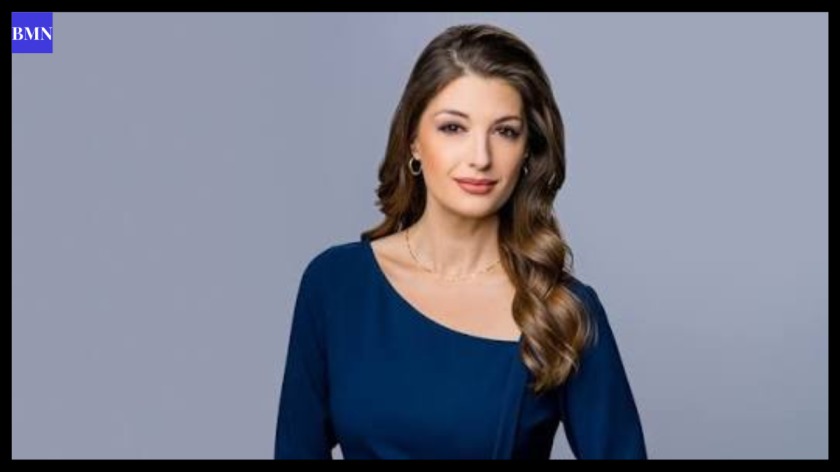
Helena Humphrey is a journalist from the UK who has established an impressive career in radio, television and humanitarian communications. She gained recognition as a journalist at the BBC News working in Washington as an anchor reporting important news from the US and around the world. The career path that Helena took is very interesting since it was not a conventional one. She has worked with international broadcasting networks, got experience in humanitarian communications and covered news in various regions. This paper seeks to discuss her biography, education, career, nationality, age, husband and Twitter account and separate facts from assumptions.
Early Life and Biography
Helena Humphrey is a British journalist, broadcaster and international correspondent who has built a career around world news, politics and humanitarian issues. Her professional journey is interesting because she did not take a simple route into television journalism. She developed experience through languages, radio, writing, humanitarian communications and international reporting. These different roles helped her build the skills needed to work in fast-moving newsrooms and report complicated stories to audiences in different countries.
She is best known for her work with BBC News and her role in the BBC’s US operation in Washington, D.C. Her work places her close to major political stories and international events. Washington is one of the most important locations for a global journalist because decisions made there can affect countries around the world. Her reporting therefore covers more than American politics. It can also involve foreign policy, international relations, security, elections and other issues with wider global consequences.
Her earlier experience also adds an unusual dimension to her career. Before focusing fully on international broadcasting, she worked in humanitarian communications. She gained experience with organisations connected with international aid and crisis response. She also worked during the Ebola response in Guinea. That experience gave her a close view of how major emergencies affect people on the ground. It also helped her understand why clear and responsible communication matters during a crisis.
Several features make her professional background particularly interesting:
- International journalism and broadcasting
- Experience in radio and television
- A university background in languages
- Humanitarian communications experience
- Work connected with the Ebola response
- Experience with major international broadcasters
- Reporting experience in the United States and Europe
- A career focused strongly on international affairs
Details about her childhood and parents are not widely available from strong public sources. Many online biography pages concentrate on her career rather than her early family life. This means readers should be careful with claims about her parents, childhood and private family background. When information comes from an unknown biography website, it may simply repeat an earlier claim without independent confirmation.
Her professional history provides much stronger information. It shows a journalist who developed her career by gaining experience in different environments rather than relying on one route. Her language studies helped with international communication, while radio taught her how to present information clearly. Humanitarian work gave her experience of crisis communication, and later television roles allowed her to combine those skills with reporting.
This varied background is also useful for people who want to work in journalism. A successful journalist does not always begin with a major television job. Experience in writing, radio, communications, research, languages and international organisations can all become valuable later. Her career provides a good example of how skills from different fields can eventually come together.
Education and Career Journey
Her education helped establish the international direction of her career. She studied modern foreign languages at the University of Nottingham and graduated in 2009. Learning languages can offer benefits beyond communication. It can introduce students to different cultures, improve their understanding of international issues and make it easier to work in different countries. Those skills became especially useful as her career developed.
After university, she moved to Paris and worked in education while also developing her writing experience. This period gave her an opportunity to live outside the United Kingdom and gain a better understanding of international life. Freelance writing also helped her develop skills that would later become important in journalism. Writing clearly, researching information and explaining complicated subjects are central parts of both print and broadcast journalism.
She then moved further into broadcasting. Her career included work with international radio organisations, including Radio France Internationale and World Radio Switzerland. Radio provided valuable training because presenters must communicate effectively without relying on pictures. A strong radio journalist needs a clear voice, good timing and the ability to explain an event in a way that keeps the audience interested.
Her work in Switzerland also gave her experience presenting a breakfast program. Breakfast broadcasting can be particularly demanding because audiences expect a mixture of breaking news, interviews, analysis and practical information. Presenters must move quickly from one subject to another while maintaining a calm and confident style.
The next stage of her career involved humanitarian communications. This was a major change from conventional broadcasting, but it added important experience. Humanitarian organisations need to communicate clearly during emergencies, often when information changes quickly and people are under significant pressure.Her career later returned strongly to journalism. She developed experience with major international broadcasters and eventually worked in Washington. Each position added another part to her professional skill set. Rather than focusing on one narrow subject, she developed experience in reporting, presenting, international affairs and crisis communication.
Her career path can be understood through several stages:
- University education in modern foreign languages
- Early work in Paris
- Freelance writing experience
- International radio broadcasting
- Presentation work in Switzerland
- Humanitarian communications
- International news reporting
- Washington-based journalism
- Senior broadcasting and correspondent roles
- BBC News work in the United States
This career path offers useful lessons for aspiring journalists. First, international experience can make a significant difference. Living and working in other countries can improve cultural understanding and help journalists avoid viewing global events from only one national perspective.
Second, communication skills matter in almost every journalism role. Writing, speaking, interviewing and explaining information are all connected. Experience gained in one area can therefore support a later move into another.
Third, journalism requires adaptability. News organisations often expect reporters to work across television, radio, websites and social media. Journalists also need to respond quickly when major stories develop. A broad professional background can make this easier.
Her career also shows the value of taking opportunities outside a traditional newsroom. Humanitarian communications may seem different from journalism, but both require accuracy, clear messaging and an understanding of audiences. That experience can provide useful knowledge when a journalist later reports on disasters, conflicts, health emergencies or humanitarian crises.
BBC Career and Work in Washington
Her BBC career is one of the most important parts of her professional story. She joined the BBC’s US operation as a senior journalist and has worked as an anchor and correspondent in Washington, D.C. The role gives her access to one of the world’s most important centres of political power.
Washington is home to the White House, Congress, government departments, foreign embassies and many international institutions. Major decisions made there can influence the global economy, foreign policy and international security. A correspondent working in Washington therefore needs to understand both American politics and the wider effects of US decisions.
This is especially important during elections. Presidential elections attract international attention because the result can influence relationships between the United States and other countries. A global broadcaster must explain not only who is winning or losing but also what the result could mean for the rest of the world.
Political journalism also requires careful handling of information. Statements from politicians can change quickly, and journalists must distinguish between confirmed facts, claims and predictions. They also need to explain complicated political processes without using unnecessary technical language.
Her previous experience prepared her for this environment. She had already worked in Washington before joining the BBC and had experience with international audiences. Her background in humanitarian communications also gave her experience working with sensitive information.
A Washington correspondent may work on several types of stories during a normal week. These can include presidential announcements, elections, diplomatic meetings, international conflicts, economic decisions and major domestic developments.
The job can involve:
- Preparing live television reports
- Interviewing politicians and experts
- Researching breaking stories
- Explaining political developments
- Reporting from different locations
- Writing digital news updates
- Providing background and context
- Working under tight deadlines
One of the most important skills in this type of role is the ability to simplify complex information. Political stories can contain unfamiliar laws, institutions and historical events. A journalist has to explain those subjects in a way that makes sense to ordinary viewers.
This is where international experience can become especially useful. Audiences outside the United States may not understand every part of the American political system. A correspondent can help bridge that gap by explaining the context and showing why an event matters.
Her BBC role also reflects the changing nature of journalism. Modern audiences consume news through television, websites, mobile phones and social platforms. Journalists need to adapt their reporting style to each format while keeping the facts consistent.
This makes international correspondents more than television presenters. They often research stories, speak to sources, prepare scripts, conduct interviews and contribute to digital coverage. Their work can continue throughout the day as a major story develops.
Her career in Washington therefore represents the combination of several skills developed over many years. Radio taught her presentation, humanitarian work taught her crisis communication and international broadcasting gave her experience with global audiences. The BBC role brings these abilities together in one demanding professional environment.
Age, Birth, Nationality and Personal Details
Questions about age and birth details are among the most common searches made about television journalists. In this case, some secondary websites report a birth year of 1987 and a February birth date. If the reported year is correct, she would be 39 years old in 2026.
However, the exact date of birth does not appear to have strong confirmation from a primary professional source. This is an important distinction when researching online biographies. A detail can appear on many websites simply because other websites copied it. Repetition does not necessarily make the information more reliable.
Some secondary sources also report Great Yarmouth in England as her birthplace. Again, readers should distinguish between reported information and details confirmed through strong professional sources. Her British nationality is much clearer than some of these personal details.
Her career has taken her far beyond the United Kingdom. She has worked in different parts of Europe and has experience connected with Africa, Asia and the United States. Her international background is one of the strongest themes in her professional story.
Her education in languages also supports that international profile. Language study can help journalists communicate with people from different cultures and understand how events are discussed outside their home country.
People commonly search for the following biographical details:
- Reported birth year: 1987
- Reported birth month: February
- Reported birthplace: Great Yarmouth, England
- Nationality: British
- Profession: Journalist and broadcaster
- Current professional base: Washington, D.C.
- Education: Modern foreign languages
- Current organisation: BBC News
- Previous international media experience: Deutsche Welle, NBC News and Euronews
Her private life is less documented than her career. This includes information about her parents, wider family and childhood. When such details are not confirmed through reliable sources, it is better to acknowledge the gap rather than fill it with speculation.
The same principle applies to relationships. Public interest in journalists can lead to many online claims about their personal lives. Some may be accurate, while others may be copied from unsourced pages. Readers should therefore look for information from reputable publications or direct statements.
There is also an important difference between public interest and public evidence. A topic may receive thousands of searches without having a clear answer. Search popularity does not prove that a claim is true.
For this reason, a high-quality biography should separate three types of information: confirmed professional facts, reasonable but unconfirmed reports and claims that have no reliable support. This makes the article more useful to readers and reduces the chance of spreading misinformation.
Husband, Twitter, Wikipedia and Online Searches
Interest in her husband is another common part of searches about her personal life. Several secondary sources identify fellow journalist Carl Nasman as her husband. Both have professional connections with international journalism, and the BBC has previously identified them as senior journalists working in its US news operation.
Their shared professional background makes the subject interesting, but detailed information about their private relationship remains limited. A useful biography should therefore focus on information that reputable sources can support rather than making assumptions about their personal lives.
Searches for her social-media accounts are also common. People often use social platforms to follow journalists because they can provide quick updates during breaking news. A journalist working in Washington may post short comments about developing political stories, interviews or reporting assignments.
However, social media also creates a challenge. Public figures can have fake accounts, fan accounts or profiles belonging to people with similar names. Readers should check that an account is genuine before treating it as an official source.
Social media can be useful for:
- Following breaking-news updates
- Seeing reporting assignments
- Finding interview announcements
- Tracking major political stories
- Reading brief comments from journalists
- Discovering related BBC coverage
The search term “Twitter” is still widely used even though the platform is now known as X. This is why people may use both terms when searching for the same professional account.
There is also interest in finding a Wikipedia biography. A dedicated and substantial Wikipedia article does not appear to provide the main source of information about her career. However, this does not mean that reliable information is unavailable.
Professional interviews and media profiles can provide more useful information than a short biography page. For example, interviews about her humanitarian experience can explain how she entered journalism and why international reporting became important to her.
BBC announcements can also provide valuable information because they confirm professional roles and appointments. These sources are especially useful when researching employment history.
Readers should be careful with biography websites that provide very specific details without identifying where the information came from. Some sites use automatically generated text, while others copy information from older articles. If several websites contain identical wording, they may not represent independent confirmation.
The best approach is to compare information from several types of sources. A broadcaster’s announcement can confirm a professional role, an interview can provide personal career insight, and an established publication can offer additional context.
Is Her Journalism Career Worth Following?
For people interested in international news, her career provides a useful example of how modern journalism works. Her background combines several areas that are important in today’s media industry. She has experience with live broadcasting, international reporting, political coverage and crisis communication.
Following a journalist’s work can also help readers understand how major stories develop. Breaking news often begins with a small amount of confirmed information and grows as journalists speak to sources and gather evidence. Watching that process can help audiences become more careful news consumers.
Her international background is another reason her work may interest viewers. Someone who has worked across different countries may approach an international story with a broader perspective than someone who has spent their entire career covering one local area.
At the same time, audiences should never rely on one journalist or one broadcaster for every story. Good news consumption involves comparing reputable reports and checking important claims.
This is especially true for political stories. Different broadcasters may emphasise different aspects of an event. Reading more than one report can help viewers understand the wider context.
Her career can also be useful for students. Those interested in journalism can study how she moved from languages and radio into international television. The path shows that early career choices do not have to determine someone’s entire professional future.
People considering journalism can learn from several parts of her experience:
- Build strong writing and communication skills.
- Learn about international affairs.
- Consider studying languages.
- Gain practical experience early.
- Develop confidence in interviews.
- Learn how to verify information.
- Be comfortable working across different media formats.
- Treat international experience as a professional advantage.
Another important lesson is the value of adaptability. News organisations change quickly, and journalists may need to work across television, websites, podcasts and social media. The ability to learn new formats can help extend a career.
Her work also demonstrates that journalism can involve subjects far outside politics. Humanitarian issues, social change, international development and global emergencies all require strong reporting.
Overall, her career is worth following for people who want to understand international journalism and the skills required to report from a major political centre. It also provides a realistic example of how varied experience can gradually lead to senior roles.
Frequently Asked Questions
Who are Helena Humphrey’s parents?
Reliable public information about her parents is limited, with most published biographies focusing on her professional career.
Where is Helena Humphrey now?
She is associated with BBC News and has worked as a Washington-based anchor and correspondent covering international affairs.
What nationality is Helena Humphrey?
She is British, although her journalism career has taken her across several countries.
How old is Helena Humphrey?
Secondary sources report that she was born in 1987, which would make her 39 in 2026 if accurate.
Who is Helena Humphrey’s husband?
Several secondary sources identify journalist Carl Nasman as her husband, although their private life is not widely documented.
Conclusion
Helena Humphrey has built an impressive career by combining journalism, international experience and a genuine interest in global affairs. From studying languages and working in radio to gaining humanitarian experience and reporting for major broadcasters, her journey has taken her far beyond a traditional newsroom career. Today, her work with BBC News reflects years of experience covering important stories and communicating complex events to audiences around the world. People often search for details about her age, parents, husband, nationality and personal life, but some of this information is not publicly confirmed. What stands out most is her professional journey, international perspective and dedication to journalism.